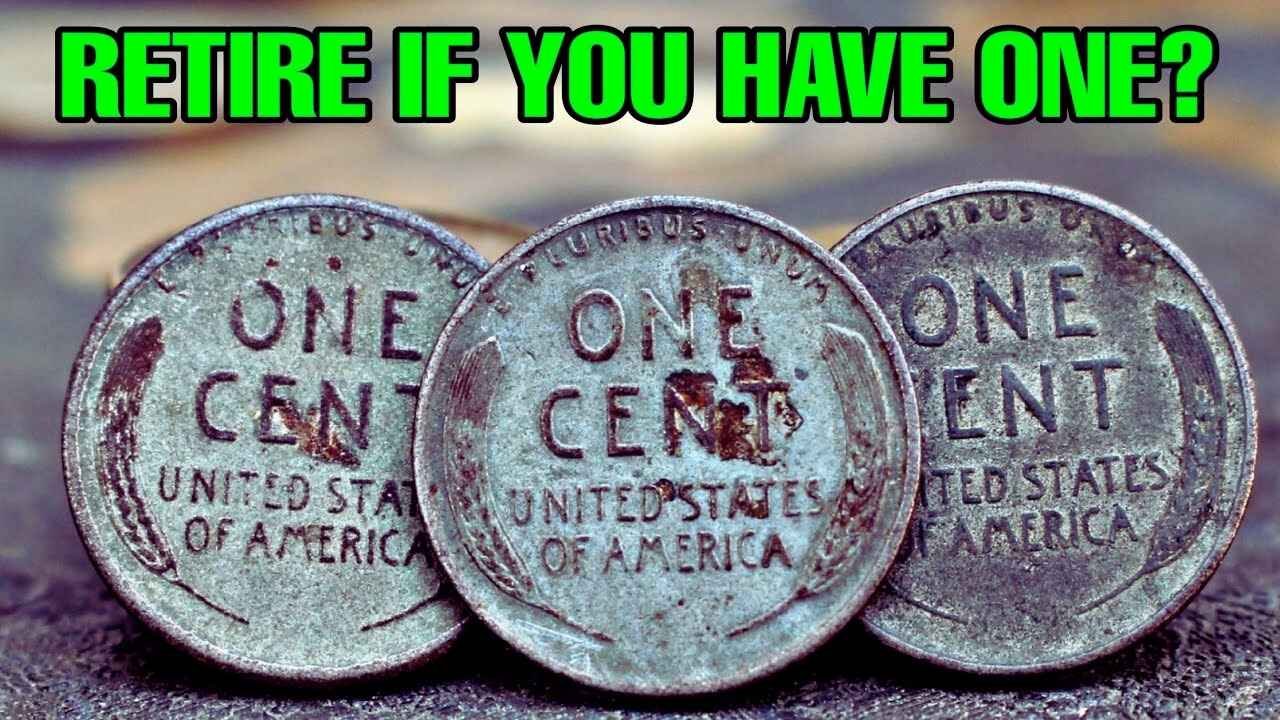
Imagine finding a penny worth thousands in your old jar of coins. That dream just got real for anyone holding a 1943 steel wheat penny – especially the ultra-rare copper versions. During World War II, the U.S. Mint switched to steel to save copper for the war effort, making 1943 pennies look silver and stick to magnets. But a few copper blanks slipped through by mistake, creating one of the most hunted coins in history. In 2025, with metal prices high and collectors hungry, these wartime wonders are making headlines and bank accounts grow fast.
Why 1943 Pennies Are Different
In 1943, over a billion steel pennies were made in Philadelphia, Denver, and San Francisco. No mint mark means Philly, “D” for Denver, “S” for San Francisco. They’re zinc-coated steel, not silver, and most are worth 10 to 50 cents today. But the real prize? The 1943 copper penny. Only about 20 are known to exist. The Mint says none were supposed to be copper that year, so every one is an error – a million-dollar mistake.
The Million-Dollar Mistake
These copper 1943 pennies happened when bronze planchets from 1942 got mixed in. Most were caught, but a handful went out. One sold for $1.7 million in 2010, and another hit $204,000 in 2023. Even lower-grade examples fetch six figures. Fake ones flood the market – altered 1948 pennies or copper-plated steel – so get any suspect coin tested by PCGS or NGC. Real copper won’t stick to a magnet and weighs 3.11 grams, not 2.7 like steel.
How to Spot a Real One
Grab a magnet first. Steel 1943 pennies stick; copper ones don’t. Check the date – clear, bold 1943 with no signs of tampering. Look at color: real copper has a warm reddish-brown tone, not gray or shiny silver. Weigh it on a digital scale. If it’s over 3 grams and non-magnetic, you might have a winner. But don’t clean it – polishing destroys value.
Famous Finds and Big Sales
People still find these in attics, old banks, and family collections. A teen in Massachusetts discovered one in his lunch money in the 1940s and sold it decades later for $218,000. In 2024, a worn but authentic 1943-D copper penny (Denver mint) sold for $372,000 at auction. Only one 1943-D bronze is confirmed – making it the holy grail.
Steel Pennies Worth Keeping Too
Not every 1943 steel penny is junk. Some have rare errors:
- 1943-S Doubled Die Obverse: Doubled “LIBERTY” and date. Worth $500 to $2,000 in high grade.
- 1944 Steel Penny: Another war-era error – steel in 1944! Only 30 known, values up to $375,000.
- Off-Metal Strikes: Steel cents on dime planchets sell for $5,000+.
Even common steel pennies in perfect condition (MS68) now sell for $1,000 or more thanks to collector demand.
What to Do If You Find One
Don’t spend it. Don’t clean it. Take clear photos and send them to a grading service. PCGS and NGC encapsulate real rarities in plastic slabs with authenticity guarantees – that’s what buyers trust. Local coin shops can help, but avoid deals that sound too good. Scammers love this hype.
The 1943 steel wheat penny story is pure American history – war, mistakes, and hidden treasure. Most are just cool souvenirs, but a few are life-changing. So raid that piggy bank, check Dad’s old coffee can, or sort Grandma’s change purse. One little penny from 1943 could be your ticket to a fortune. And if it sticks to a magnet? Keep it anyway – it’s a piece of WWII in your pocket.