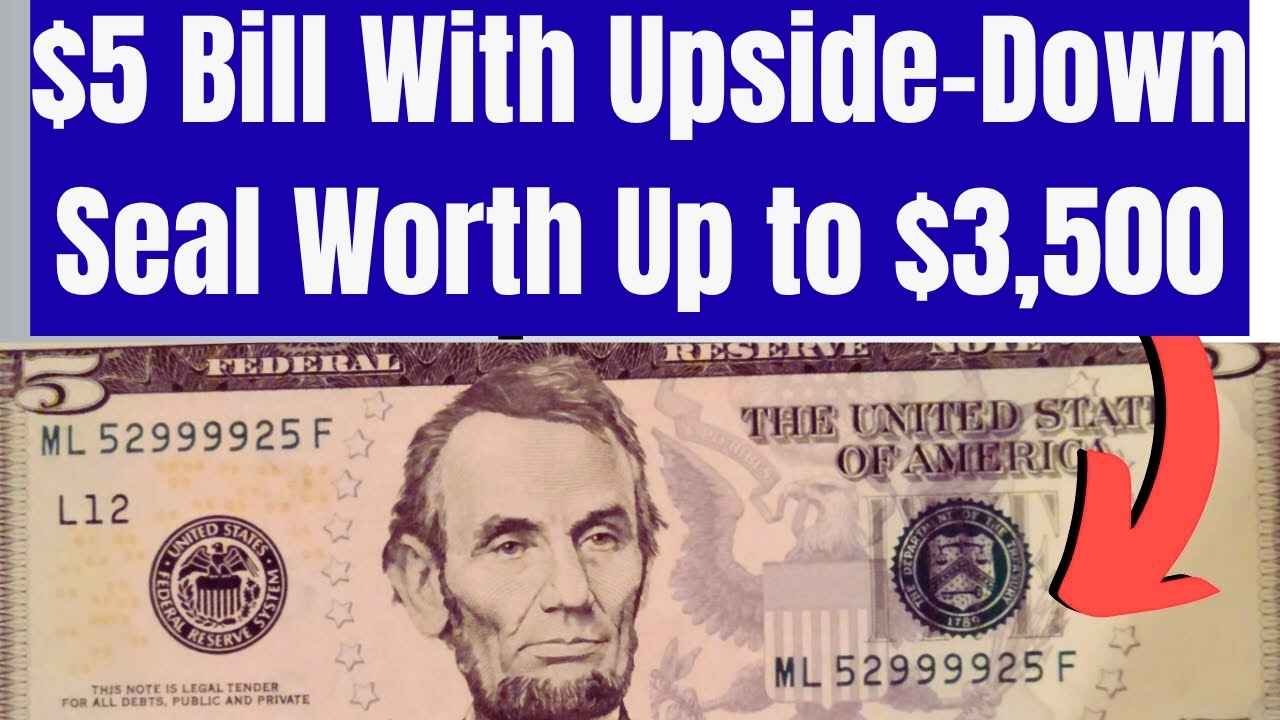
If you’ve got an old wallet or a forgotten drawer full of cash, it might be time to take a closer look. A rare printing error on the 1995 $5 bill has recently caught the attention of collectors and could turn your ordinary-looking note into a small fortune worth as much as $3,500.
The Rare Mistake That Made This Bill Valuable
Most people never notice the fine details on their money, but for collectors, small mistakes can mean big rewards. In the case of the 1995 $5 bill, the error lies in the seal, the round green stamp on the front of the bill. Normally, it’s printed upright, aligned with the portrait of Abraham Lincoln. But on some bills, the seal was accidentally printed upside down during production. This upside-down seal error makes the bill extremely rare because only a very limited number escaped into circulation before the mistake was caught. That rarity is what drives collectors to pay thousands of dollars for a single example.
How to Identify the Upside-Down Seal
Checking if you have one of these rare bills is simple. Grab a 1995 $5 bill and hold it flat in front of you. Look carefully at the green seal on the right side of the bill’s front. If it’s upside down, meaning it appears flipped compared to the rest of the print, you could be holding a collector’s dream.
| Feature | Normal Bill | Error Bill |
|---|---|---|
| Seal position | Upright, aligned with Lincoln | Upside down |
| Seal color | Green | Green |
| Series year | 1995 | 1995 |
| Value | $5 | Up to $3,500 |
Even a small tilt in the seal might increase the bill’s value slightly, but a completely inverted seal is what collectors really want.
What Determines Its Value
Not every 1995 $5 bill with a printing issue will make you rich. The condition of the bill plays a big role in how much it’s worth. Collectors prefer crisp, uncirculated bills that still look fresh from the bank. The more worn or faded your bill is, the lower the price you can expect. Other factors that can affect its value include the degree of the error, since full upside-down seals are most valuable; serial number rarity, where lower or repeating numbers can boost value; and overall print alignment and centering. If your bill meets several of these conditions, you could be looking at a serious payout.
Where to Sell It
If you think you’ve found one of these rare bills, don’t rush to the bank, as they’ll only give you $5. Instead, reach out to currency dealers or auction platforms that specialize in rare money. Websites like eBay, Heritage Auctions, and PCGS Currency Marketplace are popular places for collectors to bid on rare notes. Before selling, you may want to have your bill authenticated and graded by a professional service like PMG (Paper Money Guaranty) or PCGS. A verified grade can significantly increase your note’s resale value and attract serious buyers.
Why Collectors Love Error Bills
Currency collectors, known as notaphilists, are fascinated by mistakes because they represent a glimpse into the production process of the U.S. Treasury. Printing errors like misaligned seals, double prints, or inverted backs are incredibly rare because of the strict quality controls in place. That rarity, combined with the story behind the mistake, makes each note unique and valuable. It’s a reminder that sometimes, even the government’s printing presses can make an expensive little slip-up.
Final Thoughts
So next time you’re paying for groceries or digging through an old wallet, take a moment to inspect your cash. A 1995 $5 bill with an upside-down seal could turn an ordinary day into a lucky one. With collectors willing to pay up to $3,500 for one, it’s proof that treasure doesn’t always come in gold, sometimes, it’s right there in your pocket.