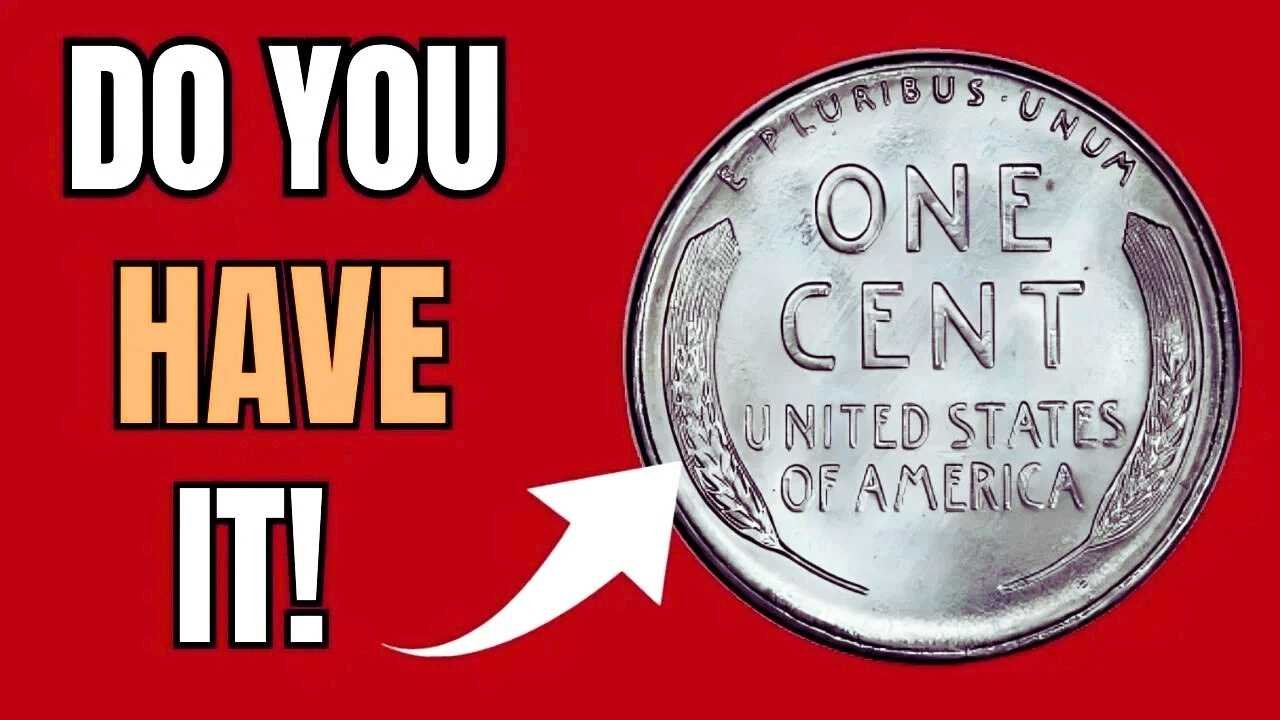
A Small Coin with a Big Story
The Lincoln Wheat Penny is one of America’s most iconic coins, first introduced in 1909 to honor the 100th anniversary of Abraham Lincoln’s birth. For over half a century, it circulated widely in the United States, featuring two wheat stalks on the reverse side a simple yet classic design. While most of these pennies are worth just a few cents today, a few rare versions have become incredibly valuable, with one rumored to be worth as much as $21 million. This has left collectors and everyday people wondering could one still be hiding in your loose change?
The Mystery Behind the $21 Million Penny
The story of the $21 million Lincoln Wheat Penny centers on a few extremely rare minting errors that occurred during production. The most famous of these is the 1943 copper penny, a coin mistakenly struck on copper instead of the steel used that year due to World War II metal shortages. Only a handful of these copper pennies were ever made, making them some of the rarest coins in existence. One of these unique pennies was reportedly sold at a private auction for a staggering $21 million, breaking records in the world of coin collecting.
Why Is It So Valuable?
Several factors contribute to the incredible value of this particular penny. Its rarity is the main reason fewer than 20 authentic 1943 copper pennies are known to exist. The historical significance also adds to its worth, as it represents a fascinating error from a time when every piece of metal mattered during wartime America. Condition plays a huge role as well. Coins graded in near-perfect condition by professional collectors can command much higher prices than those with visible wear and tear.
| Coin Detail | Information |
|---|---|
| Type | Lincoln Wheat Penny |
| Year | 1943 (Copper Mint Error) |
| Composition | 95% Copper, 5% Tin and Zinc |
| Weight | 3.11 grams |
| Estimated Value | Up to $21 Million |
| Known Examples | Fewer than 20 Worldwide |
Even though the $21 million figure sounds unbelievable, it highlights how passionate collectors can be when it comes to owning a piece of history. The Lincoln Wheat Penny, especially the rare 1943 copper version, is considered the “Holy Grail” of American coinage.
Could It Still Be in Circulation?
Surprisingly, yes at least in theory. While most of the rare copper pennies have already been discovered and authenticated by experts, a few could still be out there in circulation or tucked away in someone’s old coin jar or drawer. Over the years, people have found valuable coins in the most unexpected places, including yard sales, coin rolls from banks, or even in family heirloom collections. It’s worth checking your old pennies particularly those from the early 1940s because you might just get lucky.
How to Identify a Rare 1943 Copper Penny
If you think you might have one of these valuable coins, there are a few ways to tell. A genuine 1943 copper penny will not stick to a magnet (since steel coins from that year will). The color will also be a rich reddish-brown rather than the silvery tone of the steel versions. Finally, the coin should weigh around 3.11 grams if it’s lighter, it’s probably steel. Before you get too excited, it’s best to have it authenticated by a professional coin dealer or a grading service like PCGS or NGC.
The Enduring Legacy of the Lincoln Penny
Even though the chances of finding a $21 million penny are slim, the Lincoln Wheat Penny remains a symbol of American history and craftsmanship. Collectors continue to treasure it for its design, its story, and the small piece of history it represents. Whether or not the $21 million legend is still out there, it has sparked a renewed interest in coin collecting and inspired countless people to take a closer look at their spare change.
Final Thought
The idea that a simple one-cent coin could be worth millions captures the imagination of everyone who hears about it. The 2026 Lincoln Wheat Penny worth $21 million may or may not still be in circulation, but its legend lives on reminding us that sometimes, the smallest things can hold the greatest value. So, the next time you check your pockets or empty a coin jar, take a closer look you just might be holding a fortune in the palm of your hand.